



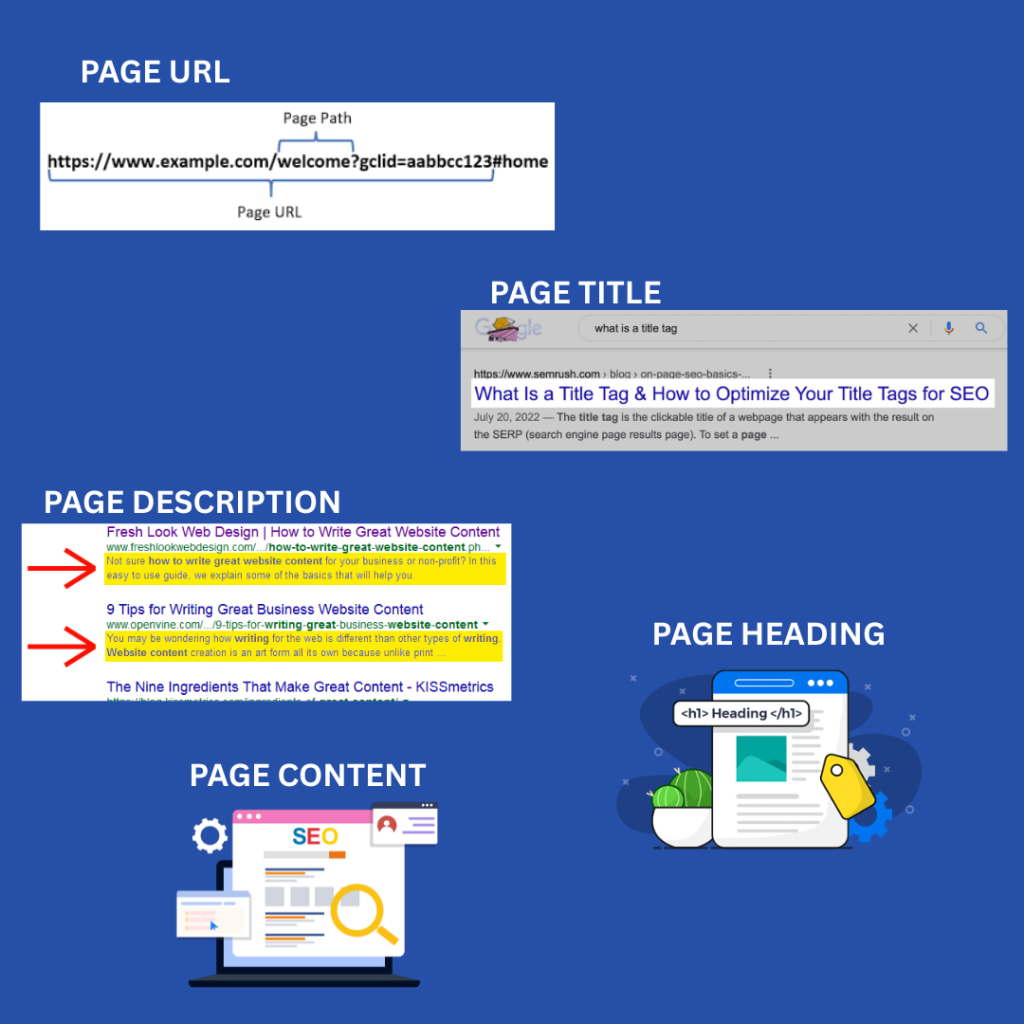
One-page SEO, refers to optimizing individual web pages to rank higher in search engine results and attract more relevant traffic. Effective one-page SEO involves several key components, including the page URL, page title, page heading, page content, and page description. Each of these elements plays a crucial role in improving search engine visibility and user experience.
Page URL
A well-structured page URL is essential for SEO. It should be concise, descriptive, and include relevant keywords to help search engines and users understand the content. Avoid long, complex URLs with unnecessary numbers or symbols. A clean and keyword-rich URL enhances a page’s chances of ranking higher in search results. For example, instead of using “www.example.com/p=1234”, a better URL would be “www.example.com/seo-tips”.
Page Title
The page title, also known as the title tag, is one of the most critical SEO factors. It appears as the clickable headline in search engine results and should include primary keywords naturally while maintaining readability. An ideal title is under 60 characters, ensuring that it is fully visible in search results. A compelling and keyword-optimized title improves click-through rates and search rankings.
Page Heading
The page heading, typically wrapped in an H1 tag, serves as the main topic indicator for both users and search engines. It should be clear, engaging, and include the primary keyword. Proper heading structure (H1 for the main heading and H2-H6 for subheadings) improves content organization, making it easier for search engines to understand and for users to navigate.
Page Content
The page content is the core of on-page SEO, providing valuable information to users. It should be high-quality, well-structured, and keyword-optimized without keyword stuffing. Search engines favor original, informative, and user-friendly content that aligns with search intent. Using bullet points, images, and internal links enhances readability and engagement. Additionally, maintaining a good keyword density and incorporating synonyms and related terms improves search rankings.
Page Description (Meta Description)
The page description, also known as the meta description, is a short summary of the page content that appears in search results. Although it does not directly impact rankings, a compelling and keyword-rich description can significantly improve click-through rates (CTR). It should be between 150-160 characters, include primary keywords, and encourage users to click on the link by providing a clear value proposition.